Tracing Bonus Credit Routes: Integrating No-Deposit Entries with Progressive Jackpot Networks
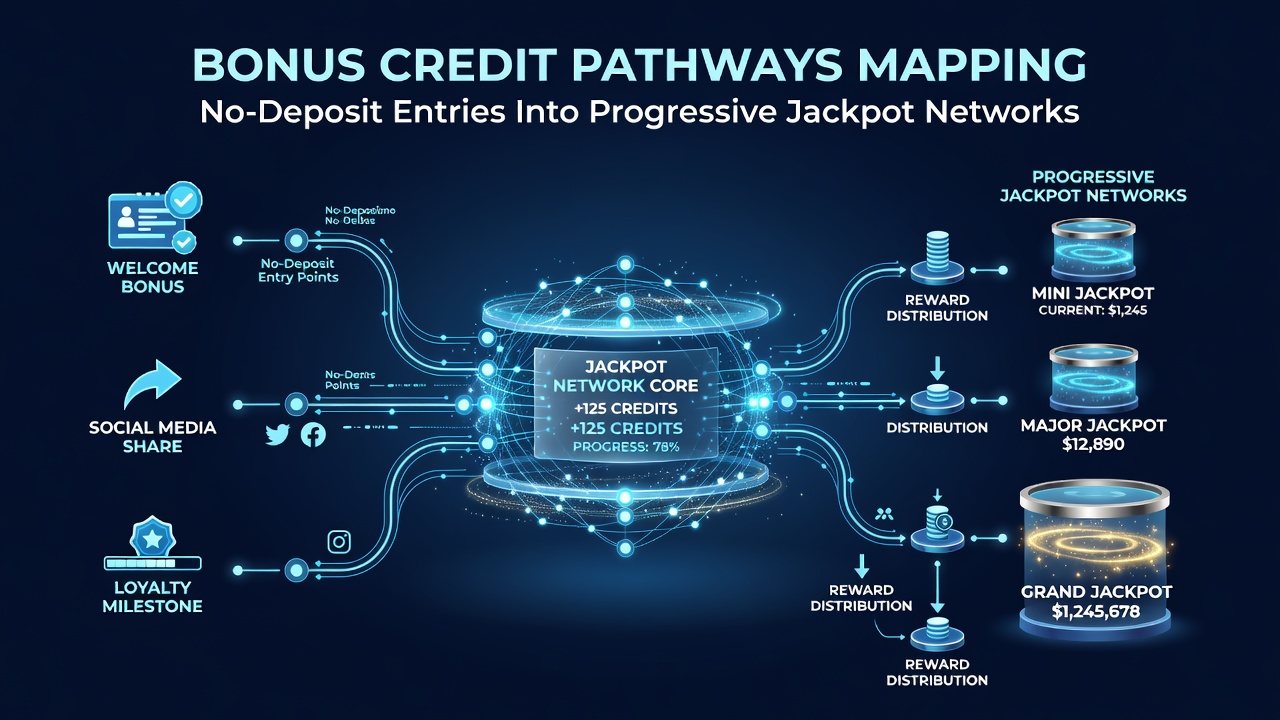
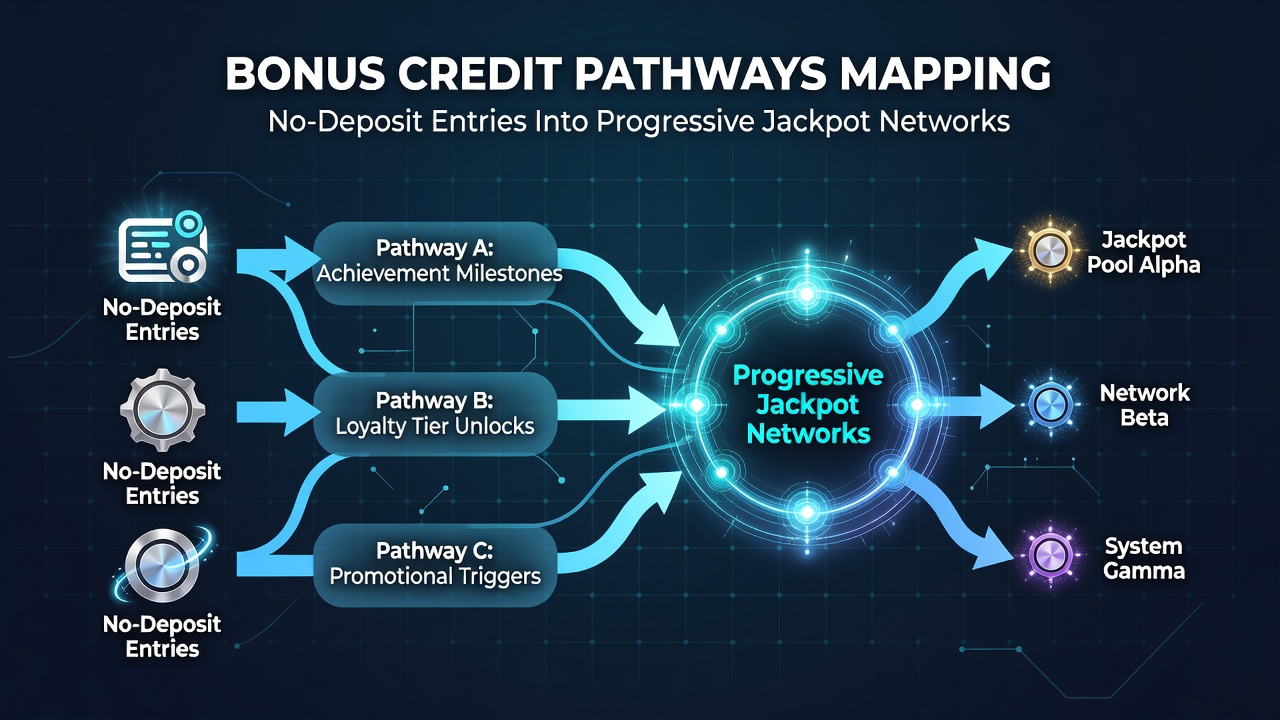
Bonus credit pathways represent structured systems that channel no-deposit entries into shared progressive jackpot pools, and operators track these movements through dedicated mapping protocols that assign values based on contribution rates and eligibility rules. Network administrators apply algorithms to convert free credits into wager equivalents, which then feed into the progressive meter without requiring initial player deposits. This process relies on predefined conversion tables that adjust for game type, volatility settings, and regional compliance standards.
Core Mechanics of No-Deposit Entry Mapping
Systems record each no-deposit allocation as a distinct transaction identifier that links directly to the jackpot controller, while contribution percentages typically range from 0.5 percent to 3 percent depending on the slot configuration. Software platforms log these entries in real time so that pool totals update accurately across multiple venues and online domains. Data from the Nevada Gaming Control Board shows how similar tracking frameworks maintain integrity when free credits enter shared progressive structures in land-based and digital environments alike.
Mapping protocols further segment entries by player tier and promotion source, which prevents over-allocation when multiple bonuses activate on a single account. Automated reconciliation tools compare entry logs against actual meter increments at set intervals, often every fifteen minutes during peak hours. Observers note that these checks reduce discrepancies that once reached several thousand dollars in early network implementations.
Technical Integration Layers
Integration occurs through application programming interfaces that transmit normalized credit values into the central jackpot engine, and these interfaces apply rounding rules to handle fractional contributions that arise from micro-transactions. Backend servers maintain separate ledgers for no-deposit versus cash-funded wagers, yet both streams merge at the pool level once eligibility thresholds clear. Researchers at the University of Nevada, Reno documented how such layered accounting preserved pool stability across 12 major operators during a 2024 pilot program.
Security modules encrypt the mapping identifiers to block external tampering, while audit trails capture every conversion step from initial bonus issuance to final jackpot trigger. When a progressive hit occurs, the system back-calculates the exact proportion attributable to no-deposit entries and distributes that share according to pre-set formulas. This calculation runs in under two seconds on modern hardware, allowing seamless payout processing for winners.
Regional Variations in July 2026
By July 2026 several jurisdictions outside the United Kingdom had updated their technical standards for progressive network participation, requiring operators to submit revised mapping documentation that details no-deposit handling procedures. Australian authorities, for instance, introduced mandatory quarterly audits of credit conversion rates through the Australian Communications and Media Authority framework. Canadian provincial regulators followed with similar disclosure rules that emphasize transparency in how free entries influence meter growth across inter-casino linked systems.
These updates prompted software vendors to release standardized mapping modules that operators could deploy with minimal custom coding. The modules include configurable parameters for contribution caps and expiry handling, which address cases where unused no-deposit credits age out of eligibility. Industry reports indicate that adoption reached 68 percent among major networks within the first six months of availability.
Case Examples from Network Operators
One European operator implemented a pathway that funnels no-deposit spins on mid-volatility titles into a continental progressive pool, resulting in measurable increases to base contribution volumes during promotional windows. Separate testing by an independent lab confirmed that mapped entries maintained proportional influence on jackpot probability without distorting overall return-to-player metrics. Another instance involved a North American multi-state network that adjusted its mapping tables after observing seasonal spikes in bonus redemptions during summer campaigns.
Those adjustments involved recalibrating the weighting factors applied to no-deposit entries versus deposit-funded play, which stabilized pool growth rates and reduced variance in monthly reports. External reviews by the International Association of Gaming Regulators highlighted these refinements as models for other jurisdictions considering expanded no-deposit integration.
Conclusion
Bonus credit pathways continue to evolve as operators refine the technical links that allow no-deposit entries to participate in progressive jackpot networks. Mapping systems now incorporate real-time reconciliation, encrypted identifiers, and jurisdiction-specific compliance layers that together maintain pool integrity across diverse gaming environments. Continued documentation and periodic audits support consistent application of these frameworks through 2026 and beyond.