Slot Volatility Patterns Meet Layered Reward Triggers in Contemporary Gaming Analysis
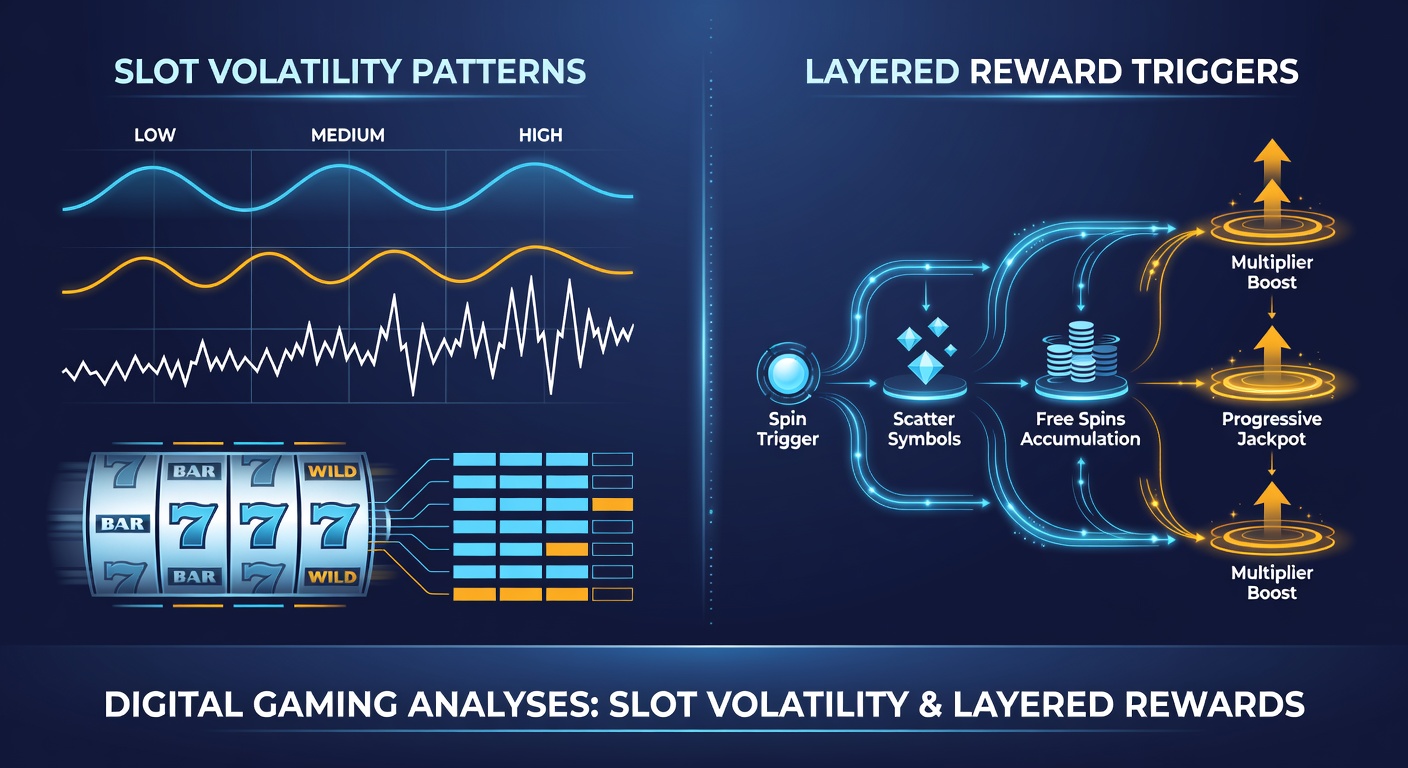
Slot volatility refers to the statistical distribution of wins across game sessions, with patterns emerging from hit frequency and payout variance that operators track through extensive data sets. Researchers at institutions such as the University of Nevada, Reno have documented how low-volatility titles deliver smaller returns at regular intervals while high-volatility machines concentrate larger sums into infrequent events, creating measurable rhythm differences in player engagement metrics.
Layered reward triggers build on these volatility foundations by stacking multiple activation conditions within single games, including base game symbols, scatter collections, and progressive meters that interact sequentially. Data from industry reports compiled by Gaming Laboratories International show that these layers often align with specific volatility tiers, where medium-volatility slots incorporate two to three distinct trigger stages to balance session length against prize potential.
Mapping Volatility Categories Through Performance Data
Analyses divide volatility into three primary bands based on standard deviation calculations applied to thousands of simulated spins. Low-volatility patterns appear in titles where hit rates exceed 30 percent yet maximum single-round returns remain capped below 50 times the stake, a structure confirmed across regulatory submissions from the Nevada Gaming Control Board. Medium-volatility games sit between 15 and 30 percent hit frequency, while high-volatility configurations drop below 15 percent and rely on multipliers exceeding 100 times stake to generate comparable return-to-player figures.
These categories influence how layered triggers activate because volatility directly affects the mathematical weighting of bonus entry points. Observers note that high-volatility slots frequently reserve their deepest reward layers for rare symbol combinations, whereas low-volatility designs embed smaller bonus stages more evenly throughout the reel cycle.
Mechanics of Layered Reward Triggers
Layered systems operate through sequential or parallel activation pathways that accumulate value before releasing payouts. A typical structure begins with a base trigger such as three matching symbols, then adds secondary conditions like additional scatters that multiply the initial award or unlock free-spin sequences with enhanced reel modifiers. Research published by the Australian Gambling Research Centre indicates that games using four or more stacked layers exhibit greater variance in session outcomes even when overall return-to-player percentages remain constant.
Trigger probabilities adjust dynamically according to the underlying volatility model, so that high-volatility titles assign lower odds to early layers while compensating with elevated multipliers on later stages. This design produces the characteristic long dry spells punctuated by substantial releases that define player experience in those machines.
Interaction Between Volatility and Trigger Layers
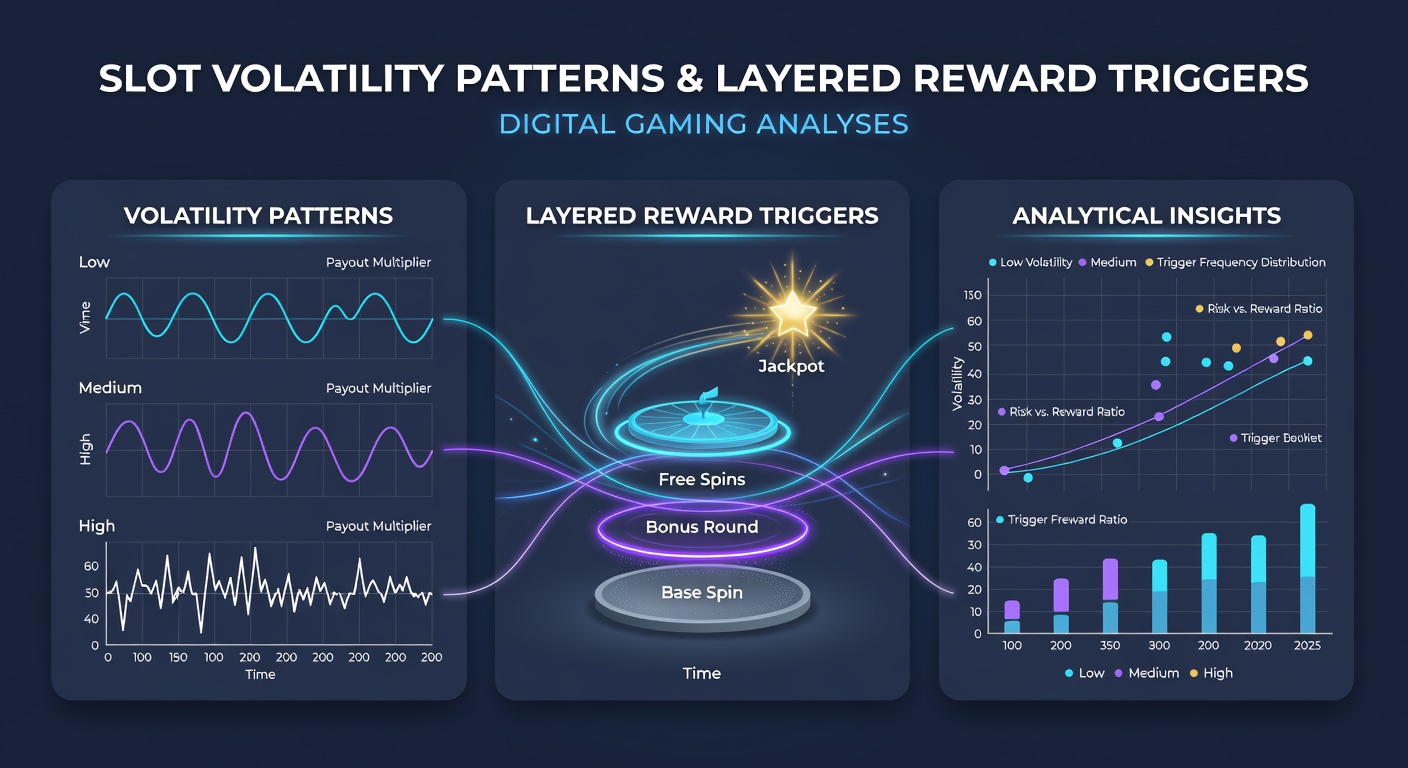
Studies reveal that volatility patterns shape not only win frequency but also the timing and magnitude of layered rewards. In low-volatility environments the early layers activate often enough to maintain steady credit flow, while deeper layers contribute occasional spikes without disrupting overall session stability. High-volatility counterparts delay most layer activations until several conditions align simultaneously, concentrating reward delivery into discrete high-impact moments.
June 2026 updates to simulation software used by testing laboratories have allowed finer granularity in mapping these interactions, with updated models incorporating real-time player behavior logs from multiple jurisdictions. Figures released by the Malta Gaming Authority highlight that titles released after these software revisions display tighter correlation between declared volatility ratings and observed layer-trigger distributions.
Analytical Tools Employed in Pattern Recognition
Modern evaluations rely on Monte Carlo simulations combined with Markov chain modeling to forecast how layered triggers respond across volatility spectra. These methods track state transitions between base game, bonus entry, and payout phases, revealing recurring sequences that operators use when configuring game parameters. Academic papers from the University of Sydney demonstrate that certain trigger combinations recur more predictably in medium-volatility titles, producing identifiable clusters within large data sets.
Heat-mapping techniques further illustrate how symbol positions on virtual reels influence layer activation rates, with clustering algorithms identifying zones where multiple triggers overlap. Such visualizations help analysts distinguish intentional design choices from random statistical fluctuations.
Conclusion
Volatility patterns and layered reward triggers function as interconnected components within digital slot architectures, each modulating the other's statistical behavior. Continued refinement of analytical methods, including those refined around June 2026, supplies regulators and developers with clearer frameworks for evaluating game fairness and player outcome distributions across different volatility bands and trigger complexities.