Layered Reward Pathways: How Casino Incentives Channel Activity Into Networked Progressive Slot Systems
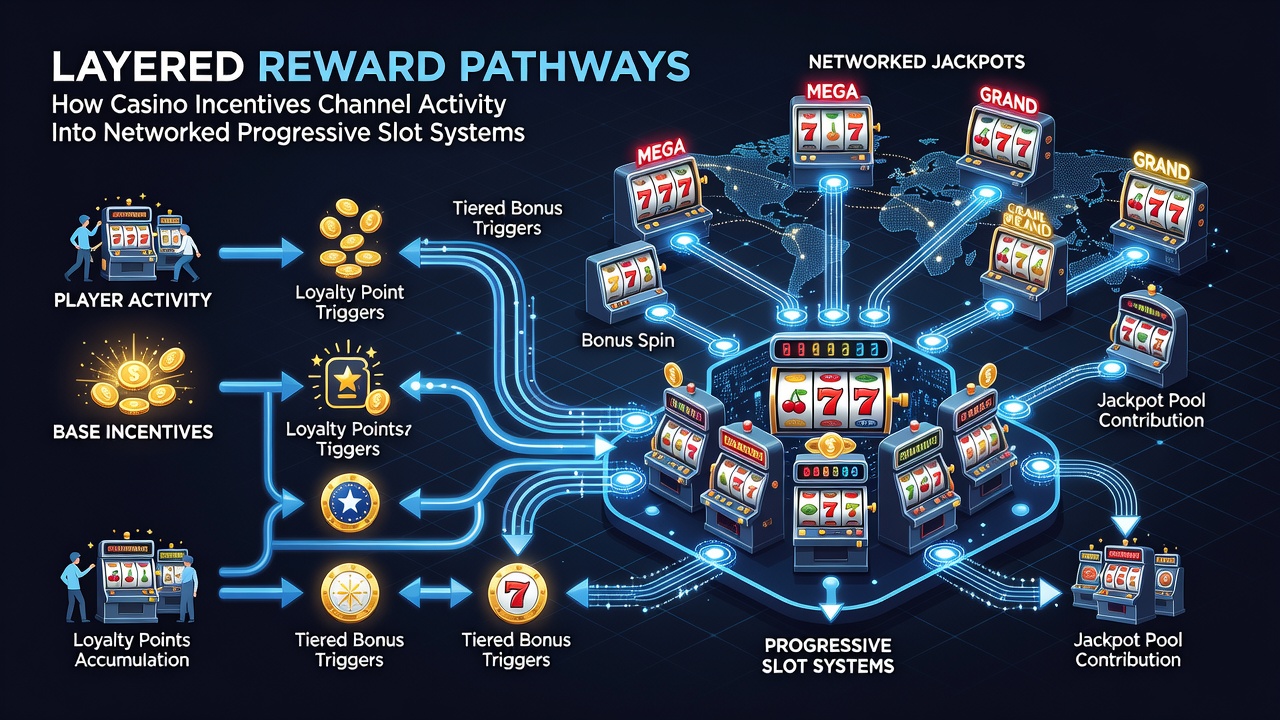
Layered reward pathways operate as structured sequences where casino incentives such as welcome bonuses, loyalty points, and cashback offers direct player activity toward networked progressive slot systems, and these systems connect multiple machines across venues or platforms so that a portion of each wager contributes to growing jackpot pools. Observers note that operators design these pathways to sustain engagement by converting initial promotional credits into repeated spins on titles where jackpots accumulate in real time.
Mechanics of Incentive Layering
Casino incentives typically begin with entry-level offers like matched deposits or free spin packages that credit player accounts with funds restricted to specific game categories, and those categories often include progressive slots tied into wider networks. Once players activate these credits, each bet deducts a fixed percentage that feeds directly into the shared jackpot pool while simultaneously advancing loyalty tiers that unlock further rewards. Data from industry reports shows contribution rates ranging between 1 and 3 percent per spin on many networked machines, which accelerates pool growth when volume increases through bonus-driven play.
Researchers at institutions such as the University of Nevada, Las Vegas have documented how sequential bonus layers compound activity, because players who exhaust one promotional layer often receive targeted follow-up offers that again route them back to the same progressive titles. This creates measurable cycles where average session length extends by 20 to 40 percent compared with non-bonus play, according to aggregated machine performance metrics.
Networked Progressive Architecture
Networked progressive systems link individual slot terminals through central servers that track contributions across multiple sites, and this architecture allows a single jackpot to draw from thousands of machines simultaneously. Operators allocate portions of each wager to different prize tiers, with the primary progressive growing fastest when incentives push higher bet volumes. In June 2026 several North American casino groups expanded their server connections to include additional state jurisdictions, which increased average pool sizes by integrating previously separate local progressives into larger regional networks.
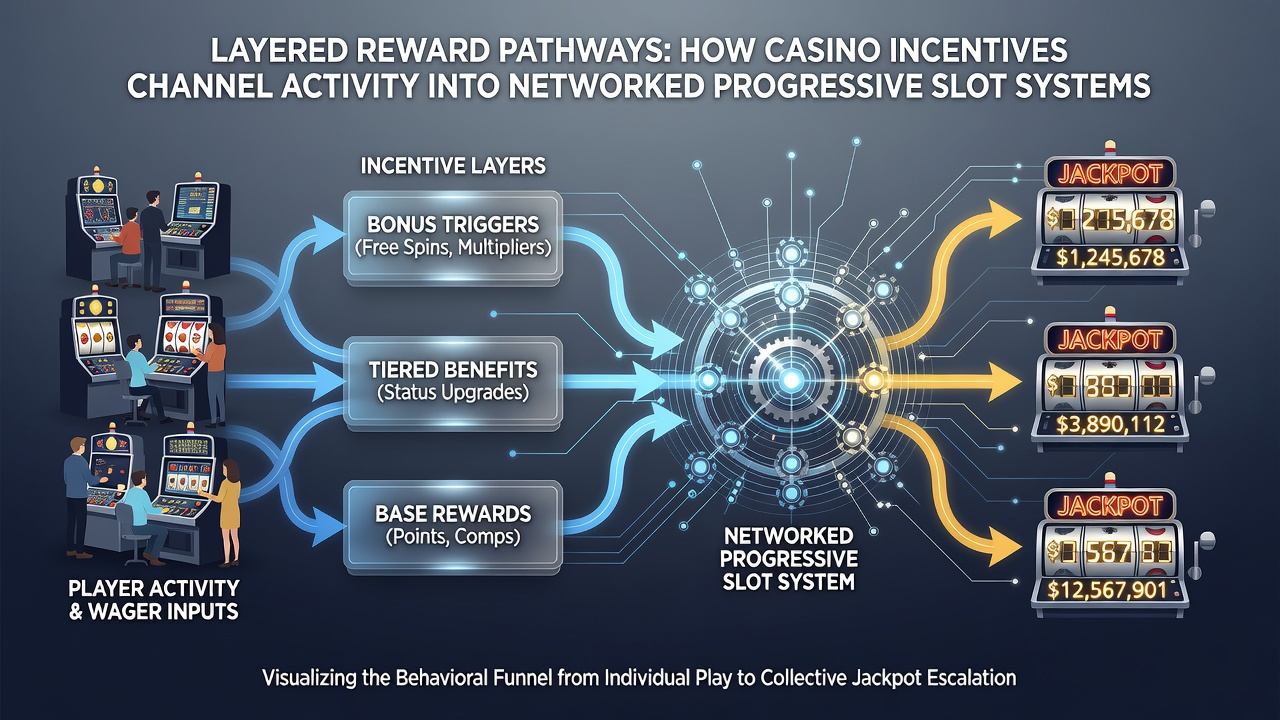
Players encounter these networks through standard game interfaces that display current jackpot amounts, and the visible growth encourages continued participation once initial bonus credits have been deployed. Australian regulatory filings indicate that similar networked configurations in licensed venues produce jackpot triggers roughly every 14 days on average when daily coin-in exceeds established thresholds, demonstrating how sustained incentive use correlates with more frequent large payouts.
Player Activity Routing Patterns
Operators track player behavior through loyalty program data that records which incentives convert into progressive slot activity, and these records reveal that certain bonus types, particularly those with wagering requirements tied to jackpot-eligible games, produce the highest routing efficiency. One documented pattern shows that loss-recovery cashback offers, when layered after an initial deposit match, extend play sessions by directing returned funds straight back into networked machines rather than cash withdrawals.
Studies compiled by the Canadian Centre for Gaming Research highlight that players who receive multi-layer promotions spend approximately 35 percent more time on progressive titles than those using single-layer offers, because each successive reward resets play budgets and maintains momentum toward the accumulating jackpots. This routing occurs without direct player choice in many cases, since game menus default to featured progressive options once bonus credits are active.
Regulatory and Operational Considerations
Gaming control boards in multiple jurisdictions require operators to disclose how promotional funds contribute to progressive pools, and these disclosures ensure transparency around the percentages allocated from bonus play. In regions outside the United Kingdom, such as Nevada and parts of Australia, updated compliance frameworks implemented before June 2026 mandate real-time reporting of networked jackpot contributions to prevent discrepancies between advertised incentives and actual pool funding.
Trade associations including the American Gaming Association publish annual summaries that track the proportion of total slot revenue derived from incentive-driven play, and recent figures reveal that networked progressives account for an increasing share of overall handle when layered reward programs operate at scale. These reports emphasize mechanical connections rather than outcomes, focusing instead on server configurations and contribution formulas that remain consistent across different incentive structures.
Conclusion
Layered reward pathways function through deliberate sequencing of casino incentives that systematically increase participation in networked progressive slot systems, and the resulting activity directly enlarges shared jackpot pools via fixed contribution mechanisms. Available data from regulatory filings and academic studies confirms that these pathways extend session durations and elevate coin-in volumes without altering the underlying probability structures of the games themselves. As operators continue expanding network connections and refining incentive layers, the technical linkages between promotional credits and progressive contributions remain central to how activity flows through these systems.